
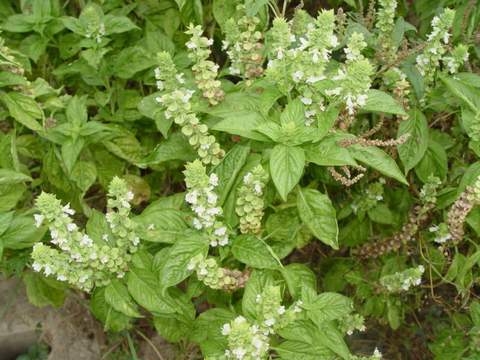
Basil Ocimum basilicum Essential Oil (Linalol & Methyl Chavicol types)
The world market for basil oil is dominated by two main types, the European and Egyptian basil oils. The European sweet basil, cultivated and distilled in Europe, the Mediterranean region, and the United States is considered to be of the highest quality, producing the finest odor. Characteristically, the essential oil from this basil contains high concentrations of linalool and methylchavicol (estragole), at a ratio of 2 or 3:1. Other constituents found in low concentrations include: 1,8-cineole, eugenol, alpha-terpeniol, beta-caryophyllene, geraniol, sabinene, alpha-phellandrene, gamma-terpinene, thujone, myrcene, limonene, ocimene, and para-cymene. The Egyptian basil oil is very similar to the European but with a higher concentration and ratio of methylchavicol relative to linalool.
Commercial Pricing & Terms
Login required to view prices on the source catalog
Pricing in this export catalog is determined by order volume, destination port, and delivery terms (Incoterms: FOB / CIF). Zero prices are simulated or invented.
How to Procure This Product
You can procure this product directly from the producer or via Exportica-Managed Sourcing with agreed inspection and export coordination services.
Prepare requirements — previewRead about sourcingExporters Offering This Product
0Multiple independent exporters may offer this product specification with their own pricing and fulfillment terms.
No exporter listings are linked to this product in the current preview.
Product gallery (7)
Full description
Botanical Origin:
Common names: basil, French basil, or sweet basil (English); basilic (French); basilikum, basilienkraut (German); tulsi (Indian); basilico (Italian); albahaca (Spanish); Raihan (Arabic).
Latin name: Ocimum basilicum L
Family: Lamiaceae (Labiatae)
Basil is cultivated commercially for its green, aromatic leaves, which are used fresh or dried as a flavoring or spice. The essential oil and oleoresin are extracted from the leaves and flowering tops via steam distillation and used in place of the dried leaves for flavoring purposes.
The common sweet basil (Ocimum basilicum), with its several types and varieties, is an annual aromatic plant, widely grown because of its pleasant spicy odor and taste. There are large and dwarf types with green, purple, or variegated leaves, some of which are ornamental. Both the leaves and the essential oils distilled from the flowering plants are used as flavoring agents.
Description:
The flowers are borne in long terminal racemose inflorescences. The greenish corolla is small and inconspicuous. The calyx, partly grown together with bracts, enlarges itself postflorally and remains with the latter dry on the plant.
Many varieties of sweet basil exist with the curly leafed variety is said to give the best yield of the oil and, incidentally, of the finest quality. The curly leafed variety is said to give the best yield of oil and, incidentally, of the finest quality.
Range & Habitat:
The world market for basil oil is dominated by two main types, the European and Egyptian basil oils.
- The European sweet basil, cultivated and distilled in Europe, the Mediterranean region, and the United States is considered to be of the highest quality, producing the finest odor. Characteristically, the essential oil from this basil contains high concentrations of linalool and methylchavicol (estragole), at a ratio of 2 or 3:1. Other constituents found in low concentrations include: 1,8-cineole, eugenol, alpha-terpeniol, beta-caryophyllene, geraniol, sabinene, alpha-phellandrene, gamma-terpinene, thujone, myrcene, limonene, ocimene, and para-cymene.
- The Egyptian basil oil is very similar to the European but with a higher concentration and ratio of methylchavicol relative to linalool.
Other distinct types of basil oil traded on the international market and which differ in aroma include:
- The Comoro (also called Reunion or African basil oil), originally distilled only on Reunion Isle but now grown and distilled throughout many parts of Africa, Madagascar, and the Seychelles Islands which has a licorice and or camphoraceous fragrance. The main constituent of this basil oil is methylchavicol, with camphor sometimes present, but little if any linalool, alpha-pinene, eugenol, or 1,8-cineole.
- Methylcinnamate-rich basil (or cinnamon basil oil) has been commercially produced in Bulgaria, India, Guatemala and Pakistan, is also traded as a natural source of methyl cinnamate.
Ecology:
Sweet basil is cultivated in agro-climes between 7 to 27°C, with 0.6 to 4.2 m annual precipitation and soil pH 4.3 to 8.2. The tender herbaceous annual, which is susceptible to frost and cold-temperature injury, develops best under long days, in full sun, and well-drained soils.
Planting, Cultivation:
- Planting:
Basil can be direct seeded or transplanted to the fiield in late Spring after all danger of frost has passed. The germination rate of the seed should be above 80 %. If the soil is heavy, an anticrustant may be used. Soil should be kept moist to hasten germination and to improve stand establishment. Seeds are small and should be planted shallow (ca.0.3 cm).
Commercially, an onion seeder will sow basil effectively. Seedbed should be friable, well-tilled and uniform. Emergence occurs after 8-14 days. Initial growth is slow, but after a few sets of leaves have emerged, growth rate increases significantly. Most small growers raising basil as an annual crop for the fresh market use transplants, rather than direct field sowing. Transplants are easy to produce and normally require 4-6 weeks of growth.
Lateral branching and growth may be encouraged by topping when plants are about 12 cm in height. Optimum population density is in part dependent upon end use; high density can be used if compatible farm equipment are available for mechanical cultivation and harvesting.
- Population and Spacing:
Rows 60 to 90 cm apart, with plants spaced every 15 cm. are commonly used. Basil can also be planted in raised beds of three rows, 30 cm. apart between rows. Distance between beds is dependent on grower’s equipment, and generally range from 24 to 36 inches.
Large variations in growth and yield should be expected due to climatic conditions, plant types, and cultural and management practices.
- Fertilization:
Fertilizer applications depend upon soil type, cropping history. Basil responds well to moderate fertility, and a N-P2O5-K2O ratio of 1-1-1 can be used successfully, with an N rate of 230-300 kg of actual N/ha applied as a broadcast and plow down. Nitrogen side dressing at rates of 50-75 kg actual N/ha is suggested following each harvest.
- Irrigation:
Basil is intolerant to water stress at any stage of development. A regular and even supply of water at rates used for most herbaceous vegetable crops will provide ample water.
- Weed control:
There are no national or state herbicide registrations for basil in the USA. This means that basil must be grown without herbicides. If basil is imported and sold for consumption in the USA it must be free of herbicide residues. As such, mechanical cultivation, high plant populations, use of mulch and manual weeding are among the choices for weed control. The presence of weeds in fresh, dry or processed basil leaves can decrease the quality of the finished product.
- Insects and Diseases:
There are several insects and diseases that may infest basil, including fusarium, but there are no pesticides currently available for use on basil. Plants should therefore be monitored continually for the presence of insects and diseases.
Harvesting and preparing for the market:
The plant part harvested depends upon the projected use. Where basil is grown for its dried leaves and the extraction of essential or volatile oil, it is cut just prior to the appearance of flowers. In the Mediterranean area and in other countries with similar climates, basil is grown as a short-lived perennial, and 3-5 cuttings or harvests per year are achieved. In the more temperate zones basil may be cut only 1-3 times. The first harvest in this case is very low, and the second occurs just prior to open bloom. Generally, basil is harvested for its leaves, sold fresh or dried. The foliage should be harvested, but only above the bottom two to four sets of true leaves.
A sickle bar gerry mower with an adjustable cutting height can be employed to cut the herb. Leaves can be harvested when needed. The foliage should be cut at least 4-6 inches above the ground to allow good second crop.
To ensure a continuous supply of leaves, the field harvests and/or planting dates can be staggered accordingly.
- Post-Harvest Handling
For Fresh Market:
Leaves should first be washed and cleaned, with weeds and extraneous materials removed. The quality of basil is determined by color and aroma retention. For the fresh market, only the highest quality plant material should be sold. Prior to milling, the leaves and/or flowering tops should be dried at low temperatures (below 40° C) to retain maximum color.
For Distillation:
After cutting the herb may be allowed to lie in the sun and wilt for 2 or 3 hr., to facilitate packing in the distilling vats, but prolonged drying may affect the quality of the oil. The wilted herb may be raked into windrows with a hay rake and hauled immediately to the distillery, where it should be firmly packed into the distilling vats.
Distillation and Yield of Oil:
By Steam Distillation
About 1 hr is required to exhaust a charge completely. The distillate should run warm as it emerges from the condenser. After separation of the oil the distillation water may be run into a separate tank and redistilled for recovering the small amount of oil which it hold in suspension.
The yields of herb and the percentages of oil vary greatly. The amount of herb obtained depends directly upon the fertility of the soil and seasonal conditions, both of which may also greatly affect the percentages of oil in the herb.
The oil is contained in the leaves and flowers of the plant; therefore, the more bushy type of plants with as few large stems as possible will produce a higher yield of oil. Cloudy or rainy weather immediately preceding the harvest decreases the yield of the oil from the plants, while bright sunny weather has the opposite effect.
From 900 kg to 1100 kg of flowering tops yield 1 kg of oil. The flowering whole over ground parts of the plant, distilled at the end of the harvest, contain considerably less oil, 1400 to 1500 kg yielding about 1 kg of oil
Basil – Specific Uses and Applications
- In perfumery and cosmetics,
- Soap production,
- Pharmaceutical industry,
- Medicine & aromatherapy: Useful in
- Muscular aches and pains,
- Respiratory disorders,
- Scanty menstruation,
- Normalize the menstrual cycle,
- Colds and flu,
- Hay fever,
- Asthma, Bronchitis,
- Mental fatigue, anxiety, depression,
- Aphrodisiac,
- Insect repellent
- Basil extract has been reported to have antioxidant activity.
- Food industry.
Adulteration:
Cultivated as a culinary herb, condiment or spice; source of essential oil for use in foods, flavors, and fragrances. The green aromatic leaves are used fresh and dried as flavorings or spices in sauces, stews, salad dressings, vegetables, poultry, vinegar, and confectionery products.
The difficulty in classifying the more than 60 varieties of Ocimum basilicum L. has been attributed to the plant’s polymorphic character and cross-pollination, resulting in large numbers of subspecies, varieties, and forms
It seems appropriate to classify these oil types according to their chemical composition and geographical source.
On this basis it becomes possible to differentiate between:
| Habitat | Main Constituents | Optical Rotation | Notes | |
|
Sweet Basil Oil |
Distilled in Europe and America from true Ocimum basilicum L.
|
· Linalool
· Methyl chavicol But no camphor |
levorotatory | This type represents the highest quality, with the finest odor. |
| Reunion Type of Basil Oil | Distilled originally on Reunion Island, but now on the Comoros, Madagascar, and the Seychelles Islands from plants of still doubtful botany. | · Methyl chavicol
· Also camphor But little if any linalool
|
dextrorotatory | They possess a slight liqorice or camphoraceous “by-note” and, therefore represent a somewhat lower quality. |
Commercially only the European and the Reunion types of oil are important.
The following types have been produced occasionally and experimentally:
| Habitat | Main Constituents | Optical Rotation | Notes | |
| Methyl Cinnamate Type of Basil Oil | distilled in Bulgaria, Sicily, Egypt, British, East India, and lately in Haiti (W.I.), supposedly from Ocimum basilicum L.
|
· Methyl chavicol
· Linalool · & substantial amount of methyl cinnamate
|
levorotatory | This fact suggests that the plant is not true Ocimum basilicum L, but perhaps Ocimum canum Sims or an allied species. |
| Eugenol Type of Basil Oil | distilled in Java, the Seychelles and Samoa, and lately also in the U.S.S.R. | eugenol is main constituent | dextrorotatory | The plant is not true Ocimum basilicum L., but perhaps Ocimum minimum or O.gratissimumL., or an allied species. |
Most commercial basil cultivars available in the market belong to the species O. basilicum. Darrah(1980, 1984) classified the O. basilicum cultivars in seven types according to morphology:
- Tall slender types, which include the sweet basil group
- Large-leafed, robust types, including ‘Lettuce Leaf’ also called ‘Italian’ basil
- Dwarf types, which are short and small leafed, such as ‘Bush’ basil
- Compact types, also described, basilicum var. thyrsiflora, commonly called ‘Thai’ basil;
- Purpurascens, the purple-colored basil types with traditional sweet basil flavor;
- Purple types such as ‘Dark Opal’, a possible hybrid between basilicum and O.forskolei, which has lobed-leaves, with a sweet basil plus clove-like aroma
- Citriodorum types, which includes lemon-flavored basils.
Phases of manufacturing the Basil Oil:
Preparation of the Herbs:
- The herb are collected from our farms or from other authorized farms we supervise
- The herb are screened & the best are selected.
- The moisture level of the seeds is reduced to the optimum by a drying process.
Steam distillation Phase:
- The herbs are put in steam distiller.
- The oil gets collected into the Collection tank.
- The Oil is transferred to Drums from the collection tank and allowed to settle.
Filtration phase:
- The settled oil is then transferred to separate Drums and the oil is filtered mechanically passing through a Filter Press.
- The filtered Oil is collected into Iron Drums and Stored in air-tight condition
Export Markets:
We export our oils to many countries all over the world. USA, France, Germany, China, Malaysia, Algeria, Morocco, Indonesia…etc
Quotation:
- Incoterms: FOB Cairo Egypt
- Quantity: More than 200 L Minimum
- Specification: 100% natural and Pure quality
- Documentation: COA, MSDS, TDS, GC Peaks
- Packaging: Bulk in 180,60,25 liters Packs or retail packaging upon request
- Payment terms: TT in advance to Our bank account
- Lead time: Shipping through 10 days from receipt of the payment.
- Sea Shipping Time: 35 days
- Air shipping time: 10 days
Quality Certificates:
- ISO 9001-2015
- ISO 22000-2005
- GMP accredited by AQC Middle East FZE
- KOSHER Certificate
- Halal Certificate
- ORGANIC Certificate accredited by CERES GmbH Germany
- NOP Certificate accredited by CERES GmbH Germany
- Egyptian Ministry of Health Permission
Contact us please to receive other supporting documents for our Geranium Oil :
- COA
- MSDS
- TDS
- GC Peaks
Branding Services
We also can do customized packaging for you to bottle whatever size you like. We can help in designing labels, selecting good bottles, and packaging. We deliver integrated solutions under your brand..
Organically Certified Oil Available upon request
Full Technical & Export Specifications
Technical specifications and packaging parameters recorded in the discovered product record.
| Specification / Parameter | Specification Value (From Source Record) |
|---|---|
| Type | Basil Linalol Sweet Type, Basil Methyle Chavicol Bitter Type |
| Oil Purity | 100% Natural & Pure without any chemical, flavor, food additive or carrier. |
| Ship from | Egypt |
| Country of Origin | Egypt |
| Cultivation Type | Organic, Conventional |
| Oil Bulk Packaging | 25 kg HDPE Plastic Jerrycan, 50 kg HDPE Plastic drum |
| HS Code | 33012590 |
| CAS Number | 8015-73-4 |
| Oil Documentation Available | Allergen Free Certificate, Bovine Spongiform Encephalophathy (BSE) Certificate, Certificate of Analysis (COA), GMO Certificate, GRAS Status Statement, Halal Certificate, Herbal Origin Statement, KOSHER Certificate, Manufacturing Flow Chart, Material Safety Data Sheet (MSDS), Organic Certificate, Pesticide Residual Certificate, Researches & Studies, Technical Data Sheet (TDS), WADA Prohibited list Statement |
| Weight | N/A |
| Dimensions | N/A |
Two Ways to Source from Egypt
Direct Exporter Trading
Connect directly with Egyptian producers, negotiate terms, and coordinate your own shipping logistics.
Exportica-Managed Sourcing
Work with Exportica to coordinate company verification, shipment sampling, export documentation assistance, and logistics support.