
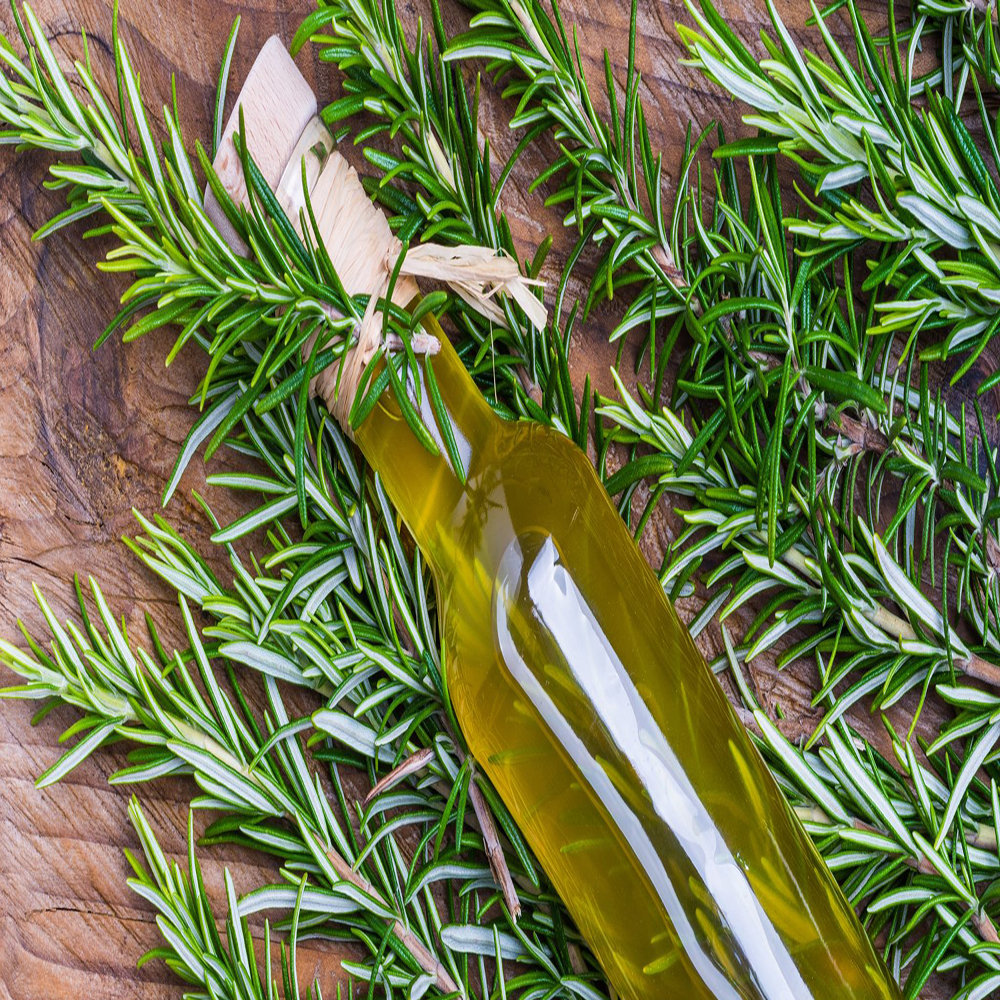
Rosemary Rosmarinus officinalis Essential Oil
Common name: Rosemary. Latin name: Rosmarinus officinalis L. Family: Apiaceae (Umbelliferae) Other names: Engl.: rosemary, dew of the sea. Deu.: Rosmarin. Suom.: rosmariini. Sven.: rosmarin. Fran.: romarin. Pharm.: folia anthos, folia roris marini Rosmarinus officinalis L. var. genuina Turrill. Occuring in most Mediterranean countries, the Canary Islands, the Azores, and Madeira.
Commercial Pricing & Terms
Login required to view prices on the source catalog
Pricing in this export catalog is determined by order volume, destination port, and delivery terms (Incoterms: FOB / CIF). Zero prices are simulated or invented.
How to Procure This Product
You can procure this product directly from the producer or via Exportica-Managed Sourcing with agreed inspection and export coordination services.
Prepare requirements — previewRead about sourcingExporters Offering This Product
0Multiple independent exporters may offer this product specification with their own pricing and fulfillment terms.
No exporter listings are linked to this product in the current preview.
Product gallery (6)
Full description
Botanical Origin:
Common name: Rosemary.
Latin name: Rosmarinus officinalis L.
Family: Apiaceae (Umbelliferae)
Other names: Engl.: rosemary, dew of the sea. Deu.: Rosmarin. Suom.: rosmariini. Sven.: rosmarin. Fran.: romarin. Pharm.: folia anthos, folia roris marini
The botany of rosemary is rather complicated, as there exist, according to Turill, several species of the genus Rosmarinus with a number of varieties and forms:
Rosmarinus officinalis L. var. genuina Turrill. Occuring in most Mediterranean countries, the Canary Islands, the Azores, and Madeira.
Description:
It is an evergreen, perennial shrub native to the chalky, calcareous hills along the Mediterranean Sea. Reaching a height of up to 1.8 meters, the plant is characterized by linear, narrow leaves whose undersides are matted with thick hair.
The erect stems are divided into numerous long, slender branches bearing many sessile, opposite leaves, about 2.5 cm long, smooth and green on the surface, woolly, whitish, and glandular beneath. The flowers appear as pale blue verticillasters. The leaves and flowering tops contain a volatile oil which can be isolated by steam distillation.
Range & Habitat:
The reported life zone for rosemary is 9 to 28 ºC with an annual precipitation of 0.3 to 2.7 meters and a soil pH of 4.5 to 8.7. The drought tolerant plant grows in rocky to sandy soils, as long as there is adequate drainage and a minimum soil depth of about 0.2 meters. The pale-blue flowers can develop throughout the growing season, although profuse blooming occurs during late winter or early spring. Rosemary has no serious pests or diseases. The plant is not cold hardy
Rosemary grows wild and abundantly in lime soil, over extended areas, on arid, sunny mountain slopes, especially in Spain, Serbia, Croatia, Tunisia, Morocco, and Southern France. The price of the oil distilled from wild plants has always been low; therefore, rosemary is not cultivated, except for ornamental purposes.
In Tunisia; the linear species, R. officinalis L., bears pale, purplish-blue flowers; the varieties flexuosus and laxiflorus, white flowers. The plant grows wild and abundantly over vast areas of Tunisia’s coastal ranges, and especially in the low mountains of central Tunisia, where it occurs in the form of dense bushes and tufts about 18 in. high. On the calcareous soils of the plateaus and plains of more than 400 m. altitude rosemary covers large sections and grow all year round.
Planting & Cultivation:
The price of the oil distilled from wild plants has always been low; therefore, rosemary is not cultivated, except for ornamental purposes.
Harvesting and Preparing for the Market:
In Spain rosemary oil is produced largely between March and July, but in the event of a heavy demand, the oil is distilled also during winter.
In Serbia & Croatia , in order to preserve the wild plant growth, government regulations provide that each section may be exploited every third year only, with a two years’ respite between the harvests. Collection is accomplished by cutting the twigs with sickles, taking care not to injure the plants. The twigs are clipped according to the development and age of the shrub, to spare the weaker plants and permit them to recuperate. The cut material is dried until the leaves fall of the twigs. In literature, this process has occasionally been referred to as fermenting or curing, but actually it means only drying to facilitate removal of the leaves from the twigs; it is sometimes concluded by a light threshing.
In Tunisia; the harvest is conducted all the year round (except for the rainy season) and reaches its peak in May & June. In July the work usually slows down. Field distillation is usually in stills of the direct fire type; some however are operated with steam generated in a separate steam boiler.
Yield of seed per Acre:
No
Method of Extraction:
By Steam Distillation.
In Dalmatia; distillation is carried out in portable stills, some of them small and primitive. These stills are charged with 80 liters of water and 30 kg. of leaves; the twigs deprived of the leaves serve as fuel for the fire beneath the stills. Distillation lasts 2 to 3 hr. the yield of oil amounts to about 1.5 %. If distillation is carried out in larger stills holding up to 1500 kg, which are heated with direct steam from a separate steam boiler. Distillation in these stills lasts only 1.5 hr and the yield is higher; up to 2%.
Yield of oil:
The yield of Spanish rosemary oil varies from about 0.725% in summer to 0.435% in winter.
The yield of Dalmatian (now Serbia & Croatia) 1.5 to 2%
The yield of Tunisian rosemary oil depends on the way the plant material has been cut, the oil glands are located in the leaves; hence the less woody parts that the plant material contains, the better will be the quality of the oil. The yield also varies with the season. The highest yields are obtained in March & April. The average yield is 0.5 to 1 %
[1] Source: Simon, J.E., A.F. Chadwick and L.E. Craker. 1984. Herbs: An Indexed Bibliography. 1971-1980. The Scientific Literatureon Selected Herbs, and Aromatic and Medicinal Plants of the TemperateZone. Archon Books, 770 pp., Hamden, CT. The Essential Oils. By Ernest Guenther. 1950
Action, Medical Uses, and Dosage.—Oil of rosemary is stimulant and rubefacient; it is principally employed, however, in perfumery. It may be used in colic, nervous disorders, debility, painful or tardy menstruation, etc., and locally to painful parts. The dose of oil of rosemary is from 2 to 10 drops.
A very pleasant cologne may be made as follows: Take of oil of rosemary, oil of lemon, each, 2 fluid drachms; oil of lavender, oil of bergamot, of each, 1 fluid drachm; oil of cinnamon, oil of cloves, oil of rose, of each, 8 minims; alcohol, 1 pint. Mix, agitate well, and after allowing the mixture to stand for a few days, with frequent agitation, filter. The following formula has been published by Farina, one of the originators of Cologne: Take of purified benzoin, oil of rosemary, each, by weight, 1/4 ounce; oil of lavender, 1/2 ounce, by weight; strong alcohol, 9 pints. Mix, and agitate thoroughly together, and then add, successively, oil of neroli (petit grains), oil of lemon, each, 1 ounce and 144 minims; oil of sweet orange (Aurantii dulcis), oil of limmetta (lime), oil of bergamot, each, 2 ounces and 228 minims; tincture of rose geranium flowers, a sufficient quantity to impart the desired fragrance. Macerate for several weeks, and then fill into flasks (Amer. Drug. Cir., Vol. VIII, p. 85; Amer. Jour. Pharm., 1864, p. 375). I have reduced the weights and measures in the above (J. King).
Notes:
- There are three principal chemotypes of Rosmarinus officinalis, with the names given by one of the main constituents:
- camphor/borneol
- cineole
- verbenone
Adulteration & its Detection:
The oil is subject to much adulteration, especially with:
| Adulterant | Appropriate method for detection | Notes |
| · Addition of synthetic camphor & cineole.
· Oil of turpentine. · Certain fractions of Camphor oil. · Oil of pine (steam distilled). · Eucalyptus oil terpenes. · Fractions resulting from the manufacture of terpineol. |
GC |
Full Technical & Export Specifications
Technical specifications and packaging parameters recorded in the discovered product record.
| Specification / Parameter | Specification Value (From Source Record) |
|---|---|
| Oil Purity | 100% Natural & Pure without any chemical, flavor, food additive or carrier. |
| Ship from | Morocco |
| Country of Origin | Morocco |
| Cultivation Type | Organic, Conventional |
| Oil Bulk Packaging | 180 kg Steel Drum, 25 kg HDPE Plastic Jerrycan, 50 kg HDPE Plastic drum |
| HS Code | 33011990 |
| CAS Number | 8000-25-7 |
| Oil Documentation Available | Allergen Free Certificate, Bovine Spongiform Encephalophathy (BSE) Certificate, Certificate of Analysis (COA), GMO Certificate, GRAS Status Statement, Halal Certificate, Herbal Origin Statement, KOSHER Certificate, Manufacturing Flow Chart, Material Safety Data Sheet (MSDS), Organic Certificate, Pesticide Residual Certificate, Researches & Studies, Technical Data Sheet (TDS), WADA Prohibited list Statement |
| Weight | N/A |
| Dimensions | N/A |
Two Ways to Source from Egypt
Direct Exporter Trading
Connect directly with Egyptian producers, negotiate terms, and coordinate your own shipping logistics.
Exportica-Managed Sourcing
Work with Exportica to coordinate company verification, shipment sampling, export documentation assistance, and logistics support.