
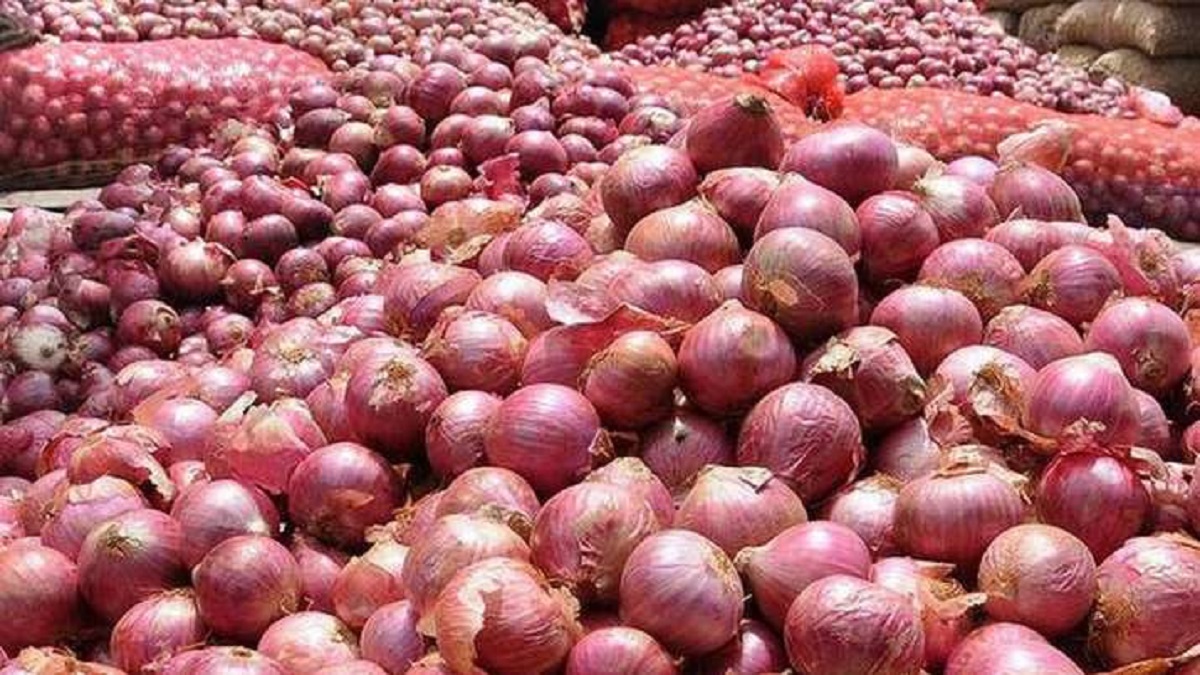
Onion Allium cepa Essential Oil (Egypt & China)
Common name: Onion Latin name: Allium cepa L. Family: Liliaceae Other names: Engl.: garden onion, common onion, onion, shallot. Arabic: Basal. Deu.: Zwiebel. Suom.: ruokasipuli, hillosipuli, kepasipuli, punasipuli, ryvässipuli, tavallinen sipuli, vihersipuli. Sven.: matlök, gullök, potatislök, rödlök, syltlök. Fran.: oignon
Commercial Pricing & Terms
Login required to view prices on the source catalog
Pricing in this export catalog is determined by order volume, destination port, and delivery terms (Incoterms: FOB / CIF). Zero prices are simulated or invented.
How to Procure This Product
You can procure this product directly from the producer or via Exportica-Managed Sourcing with agreed inspection and export coordination services.
Prepare requirements — previewRead about sourcingExporters Offering This Product
0Multiple independent exporters may offer this product specification with their own pricing and fulfillment terms.
No exporter listings are linked to this product in the current preview.
Product gallery (7)
Full description
Botanical Origin:
Common name: Onion
Latin name: Allium cepa L.
Family: Liliaceae
Other names: Engl.: garden onion, common onion, onion, shallot. Arabic: Basal. Deu.: Zwiebel. Suom.: ruokasipuli, hillosipuli, kepasipuli, punasipuli, ryvässipuli, tavallinen sipuli, vihersipuli. Sven.: matlök, gullök, potatislök, rödlök, syltlök. Fran.: oignon
Groups:
- Cepa: Onion; single bulb, produced from seed, lacking bulbils in inflorescence.
- Aggregatum: Shallot, Multiplier Onion, Potato Onion; similar to onion but smaller, reproduced by vegetative division instead of by seed and lacking bulbils in inflorescence.
- Proliferum: Egyptian or Tree Onion, (top set onions), propagated by bulbils which grow in place of flowers in the flower cluster. These are treated as sets and planted the next season
Description:
A perennial herb, strong smelling when crushed; bulbs vary in size and shape from cultivar to cultivar, often depressed-globose and up to 20 cm in diameter; outer tunics membranous. Stem up to 100cm tall and 30 mm in diameter, tapering from inflated lower part. Leaves up to 40 cm in height and 20mm in diameter, usually almost semicircular in section and slightly flattened on upper side; basal in first year, in second year their bases sheathing the lower sixth of the stem.
Range & Habitat:
Bulbus Allii Cepae (“onion”) is probably indigenous to western Asia, but it is commercially cultivated worldwide, especially in regions of moderate climate.
Onions are a cool season plant which grows well in a wide range of temperatures. Young onion plants are highly resistant to frost.
The onion is adapted to a wide range of temperatures and is frost-tolerant. Onions produce best when cool temperatures (55°-75°) prevail for an extended period of time. This will permit the onions to generate considerable foliage and root development before bulbing starts. After bulbing begins, considerably warmer temperatures and low relative humidity into the harvest and curing period are desirable.
Onion development is very dependent upon the length of day or photoperiod. Photoperiod, along with temperature, controls when the onions form bulbs. Some onion varieties are short-day in response and form bulbs when the days are 12 hours or less in length. Other onion varieties are long-day plants forming bulbs when there are 15 or more hours of daylight. This effect of day length makes some onion varieties unsuitable for northern climates because they begin to bulb when the plants are too small. The influence of day length also requires that Sweet Spanish and Bermuda onions be grown from plants rather than seed in northern climates.
Soil is the key to growing good onions. Some onion varieties are very particular about soil type. In general, deep, loose, fertile, friable soil works well for onions. Mix in compost or rotted manure to your bed before you plant. Onions grow best when soil temperatures are between 55° and 75°. Avoid heavier soils such as clay and silt loams unless modified with organic matter to improve aeration and drainage. Onions do not like highly acidic soils. The ideal soil pH for onions is between 6.2 and 6.8.
Planting & Cultivation:
Onions may be established by planting seed or transplanting sets (young onion plants).
Spacing:
Plant several rows of onions in beds 3′-4′ wide. Onions can be planted in a zig-zag pattern with 1½”-2″ between plants for the highest yield in fertile soil.
Alternately, set onions in rows 4″ apart.
Alternate spacings include 3″-4″ for larger onions and 4″ for mild or sweet types.
Direct seeding:
Direct seeding onions provides the least amount of disturbance to the growing cycle. Onions grown by direct seeding are more resistant to disease. Direct seeding takes longer so it is not always the best option in northern climates.
Direct seed in a prepared bed after the soil has warmed to 60°. Sow onion seeds in rows about ¼” – ½” deep (plant onion sets 1″ deep.). Keep rows 4″ apart. After the seeds are up and the starts are 2″-4″ all, thin onion plants to desired spacing.
Seeding for transplants:
Onion seeds can be started indoors underneath growing lights 8-10 weeks before the last frost.
Germination:
Seeds germinate best in soils around 55°F-95°F. Germination will take 5-7 days.
Harvesting and Preparing for the Market:
Onions are mature when most of the tops fall over. Once several tops fall over, use the back of a rake to bend the rest of the onion tops to the ground. Leave the onions in the ground until the tops have dried.
Harvest onions by gently pulling on the tops. Use a garden fork to carefully loosen soil around the onions if needed.
Clean the dirt off onion bulbs with a soft brush or your gloved hand. On sunny, breezy days, onions may be pulled and left in the garden for a day or two to dry before they are taken to a curing area. Curing must take place for the onions to be stored for any length of time. Cure onions by placing them in a warm, well-ventilated area until the necks are thoroughly dry. With warm temperatures, good air circulation and low humidity, curing should be completed within two weeks after harvest. Onions are cured when the outer skins are completely dry.
Storage types: Onions are divided into storage and fresh onions depending on their storage life. Fresh onions do not keep as long and are best eaten fresh. Storage onions are best stored in a cool, moderately dry area in ventilated containers. Storage onions can keep for 1-6 months at 32° and 65%-70% relative humidity.
Yield:
From 20 – 30 tons of onion bulbs are produced per acre.
Method of Extraction:
By Steam Distillation of the crushed bulbs.
Yield of oil produced up steam distillation of onion bulbs ranges from 0.015 – 0.04 %
Full Technical & Export Specifications
Technical specifications and packaging parameters recorded in the discovered product record.
| Specification / Parameter | Specification Value (From Source Record) |
|---|---|
| Oil Purity | 100% Natural & Pure without any chemical, flavor, food additive or carrier. |
| Ship from | China, Egypt |
| Country of Origin | China, Egypt |
| Cultivation Type | Organic Certified, Conventional |
| Oil Bulk Packaging | 180 kg Steel Drum, 25 kg HDPE Plastic Jerrycan, 50 kg HDPE Plastic drum |
| HS Code | 33012990 |
| CAS Number | 8002-72-0 |
| Oil Documentation Available | Allergen Free Certificate, Bovine Spongiform Encephalophathy (BSE) Certificate, Certificate of Analysis (COA), GMO Certificate, GRAS Status Statement, Halal Certificate, Herbal Origin Statement, KOSHER Certificate, Manufacturing Flow Chart, Material Safety Data Sheet (MSDS), Organic Certificate, Pesticide Residual Certificate, Researches & Studies, Technical Data Sheet (TDS), WADA Prohibited list Statement |
| Weight | N/A |
| Dimensions | N/A |
Two Ways to Source from Egypt
Direct Exporter Trading
Connect directly with Egyptian producers, negotiate terms, and coordinate your own shipping logistics.
Exportica-Managed Sourcing
Work with Exportica to coordinate company verification, shipment sampling, export documentation assistance, and logistics support.