
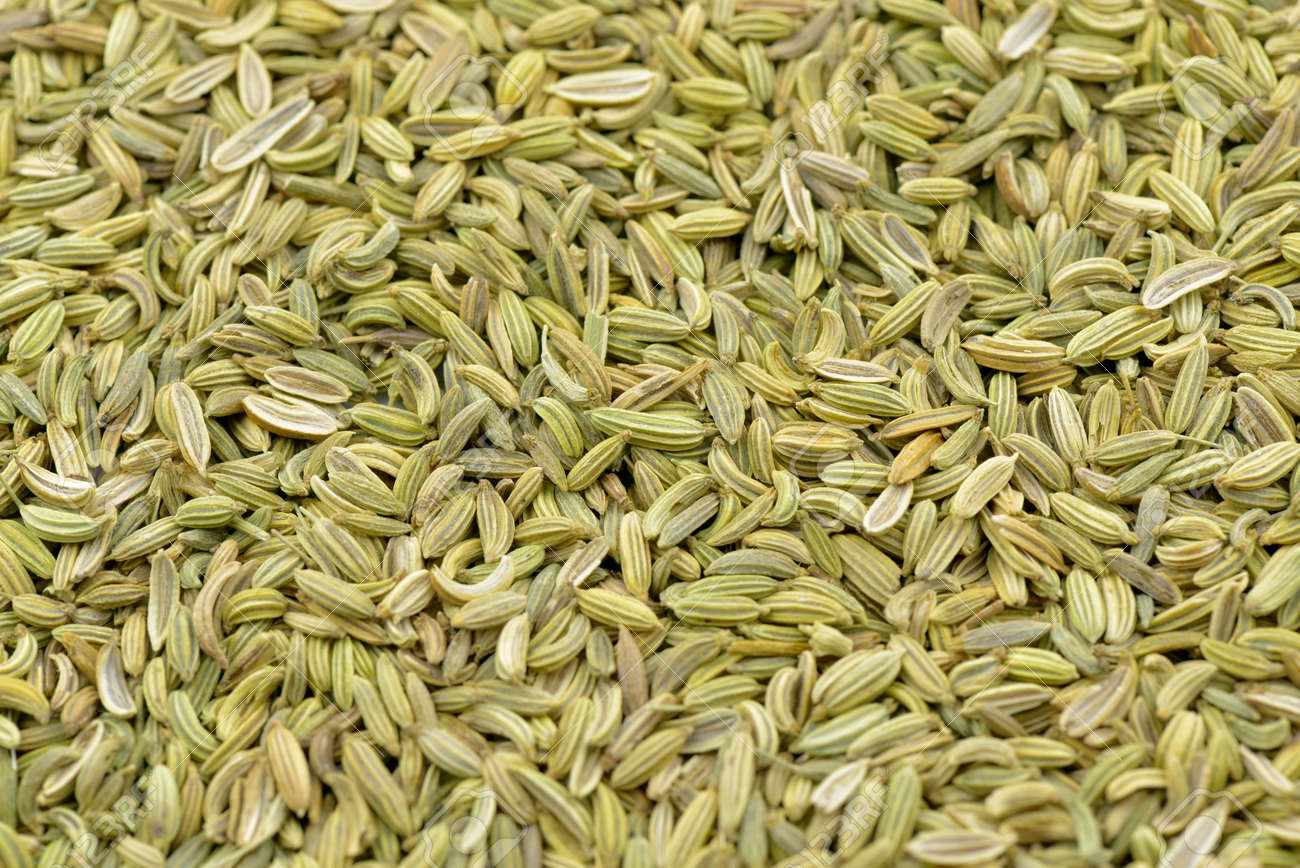
Fennel Foeniculum vulgare Seeds in Bulk packaging Shipped in 20″ FCL Container
Common name: Fennel Latin name: Foeniculum vulgare Miller. Family: Apiaceae (Umbelliferae) Other names: Engl.: fennel, bitter fennel, common fennel, garden fennel, wild fennel. Deu.: Fenchel, Gewürzfenchel. Suom.: maustevenkoli, salaattifenkoli, saksankumina, venkoli. Sven.: fänkål, besk fänkål, bitter fänkål, kryddfänkål, tysk fänkål, vanlig fänkål. Fran.: fenouil. Bot. syn.: Anethum foeniculum L., Foeniculum capillaceum Gilib., Foeniculum dulce Mill., Foeniculum foeniculum (L.) Karst., Foeniculum officinale All., Foeniculum panmoricum DC., Foeniculum piperitum (Ucria) C. Presl., Foeniculum vulgare Gaertn., Meum foeniculum Spreng.
Commercial Pricing & Terms
Login required to view prices on the source catalog
Pricing in this export catalog is determined by order volume, destination port, and delivery terms (Incoterms: FOB / CIF). Zero prices are simulated or invented.
How to Procure This Product
You can procure this product directly from the producer or via Exportica-Managed Sourcing with agreed inspection and export coordination services.
Prepare requirements — previewRead about sourcingExporters Offering This Product
0Multiple independent exporters may offer this product specification with their own pricing and fulfillment terms.
No exporter listings are linked to this product in the current preview.
Product gallery (3)
Full description
Botanical Origin:
Common name: Fennel
Latin name: Foeniculum vulgare Miller.
Family: Apiaceae (Umbelliferae)
Other names: Engl.: fennel, bitter fennel, common fennel, garden fennel, wild fennel. Deu.: Fenchel, Gewürzfenchel. Suom.: maustevenkoli, salaattifenkoli, saksankumina, venkoli. Sven.: fänkål, besk fänkål, bitter fänkål, kryddfänkål, tysk fänkål, vanlig fänkål. Fran.: fenouil. Bot. syn.: Anethum foeniculum L., Foeniculum capillaceum Gilib., Foeniculum dulce Mill., Foeniculum foeniculum (L.) Karst., Foeniculum officinale All., Foeniculum panmoricum DC., Foeniculum piperitum (Ucria) C. Presl., Foeniculum vulgare Gaertn., Meum foeniculum Spreng.
Foeniculum vulgare Miller is divided into two subspecies (capillaceum, & piperitum), the varieties which yield essential oils belong to the subspecies capillaceum (Gilib.) Homboe:
- Var. vulgare (Miller) Thellung: is cultivated and grows wild. It furnishes the oil of bitter fennel
- The plant is cultivated chiefly in Romania and Southern Russia, but also in Czechoslovakia, Hungary, Germany, France, Italy, India, Argentina, Japan, and other countries.
These regions produce the bulk of seed from which commercial bitter fennel oils are distilled.
- The plant grows wild in France, Spain, Morocco, and Algeria. The oil is distilled largely from the over ground parts, especially the tops, while they bear fruit (seed). Commercially the wild growing plant is of little importance.
- Var. dulce (Miller) Thellung: is cultivated; it does not occur wild. This variety yields the oil of sweet or Roman fennel, or also called oil of French Sweet Fennel.
This plant is cultivated in France, Italy, and Macedonia. The oil is distilled from the seed. Of all the fennel oils, this type possesses the finest odor and flavor.
Description:
Foeniculum vulgare Miller is a herbaceous perennial, in some places grown as a hapaxanthic biennial, in others as an annual, 4 to 5 ft. high, which has been known since antiquity in Europe and the Far East.
The plant bears 3 – 4 leaves pinnated into almost thread-like segments; the compound umbels of yellow flowers carry 10 to 20 rays, each ray ending in a smaller umbel. Small flowers, containing 5 petals, appear in July. The oval shaped, greenish fruit or seed varies in length from 4 to 10 mm. Odor and flavor are strong and sweet, but possess a somewhat bitter “by-note.”
Bauer suggested the following classification of commercial fennel seed:
- vulgare = dark fennel seed, originating mainly from northern (European) countries.
- dulce = light or sweet fennel seed, originating mainly from southern (European) countries.
- panmorium = East Indian fennel seed.
Range & Habitat:
The reported life zone of fennel is 4 to 27 ºC with an annual precipitation of 0.3 to 2.6 meters and a soil pH of 4.8 to 8.3. Fennel thrives on well-drained loam soil. It also grows on loamy, or sandy calcareous soils.
Planting fennel on not well-draining soils will encourage foliage growth over fruit growth.
Principal fennel production areas are located in India, the People’s Republic of China, Egypt, Argentina, Indonesia, and Pakistan
Planting & Cultivation:
Although fennel is readily grown from seed, it can also be propagated by root and crown divisions. The seed may be sown directly in the field, late in the fall or early in the spring. It is sown thickly in drills, 2 or 3 ft. apart, and covered lightly. In Egypt fennel is planted in winter preferably before October.
About 5 to 6 kg of seeds is required per acre. When well established, the plants may be thinned to stand 12 to 15 in. apart in the row. The plants may also be started in a see bed and transplanted to the field when 3 to 4 in. high. Cultivation required is the same as for ordinary garden crops.
Harvesting and Preparing for the Market:
As a rule, very little seed is produced during the first year, but full crops may be expected in succeeding years the seed should be harvested in the fall, before it is fully ripe, but sufficiently hard and of greenish-gray color. In Egypt it is harvested during May & June.
It is born on umbels and, although all the seed on an umbel matures within a fairly short time, not all of the umbels develop on the plant at the same time. When harvesting by hand it is possible to gather the more mature umbels first and go over the plants again once or twice when the remainder have matured.
The harvested material must be dried, for which purpose it is spread on a dry floor in some suitable building, or in the open, if the weather is favorable.
Harvesting in this manner is tedious and requires much labor, but it appears to be the only way of gathering all the seed at the most desirable stage.
Cutting the entire tops at one time with suitable machinery, stacking in the field until fully cured and dried (which takes 3 to 4 days) and then threshing with a modified grain thresher, seems to be the only possible procedure for handling the crop at a low labor cost. In this case, however, some seed will undoubtedly be lost; if too ripe it will shatter, and if too immature it will not be of good quality when cured.
Yield of seed per Acre:
In Egypt the productivity of 1 feddan (1.038 acres) is about 1000 kg (2200 lb.)
Export Markets:
We export our products to many countries all over the world. USA, France, Germany, China, Malaysia, Algeria, Morocco, Indonesia…etc
Quotation:
- Incoterms: FOB Egypt or China
- Quantity: one 20″ FCL Container Minimum
- Specification: 100% natural and Pure quality
- Documentation: COA, MSDS, TDS, GC Peaks
- Packaging: Bulk Packaging
- Payment terms: TT in advance to Our bank account
- Lead time: Shipping through 10 days from receipt of the payment.
- Sea Shipping Time: 35 days
- Air shipping time: 10 days
Quality Certificates:
- ISO 9001-2015
- ISO 22000-2005
- GMP accredited by AQC Middle East FZE
- KOSHER Certificate
- Halal Certificate
- ORGANIC Certificate accredited by CERES GmbH Germany
- NOP Certificate accredited by CERES GmbH Germany
- Egyptian Ministry of Health Permission
Contact us please to receive other supporting documents for our Oils :
- COA
- MSDS
- TDS
Branding Services
We also can do customized packaging for you to pack whatever size you like. We can help in designing labels, selecting good packets or bags. We deliver integrated solutions under your brand..
Organically Certified product Available upon request
Full Technical & Export Specifications
Technical specifications and packaging parameters recorded in the discovered product record.
| Specification / Parameter | Specification Value (From Source Record) |
|---|---|
| Country of Origin | India, Egypt |
| Ship from | Egypt, India |
| Herbs Packaging | PE bags 25 Kg, PE Bags 50 kg, Paper Bag 25 kg, Paper Bag 50 kg |
| Cultivation Type | Organic, Conventional |
| HS Code | 09109990 |
| Custom Branding & Packaging | Yes, OEM Custom banding, designing and packaging are available for that product |
| Herbal OEM Packaging | Kraft Bag, Kraft Bag with transparent window, Kraft bag with open side, Glass Jar, Glass jar Spices with holed lid, Tea bag, Tea bag with paper bag, Tea Cylinder packaging, Tin Packaging |
| Documentation & Certifications | Allergen Free Certificate, Bovine Spongiform Encephalophathy (BSE) Certificate, GMO Certificate, GRAS Status Statement, Herbal Origin Statement, Organic Certificate, Pesticide Residual Certificate, Halal Certificate, KOSHER Certificate, Researches & Studies, Certificate of Analysis (COA), Technical Data Sheet (TDS) |
| Weight | 12000 kg |
| Dimensions | 610 × 244 × 259 cm |
Two Ways to Source from Egypt
Direct Exporter Trading
Connect directly with Egyptian producers, negotiate terms, and coordinate your own shipping logistics.
Exportica-Managed Sourcing
Work with Exportica to coordinate company verification, shipment sampling, export documentation assistance, and logistics support.