
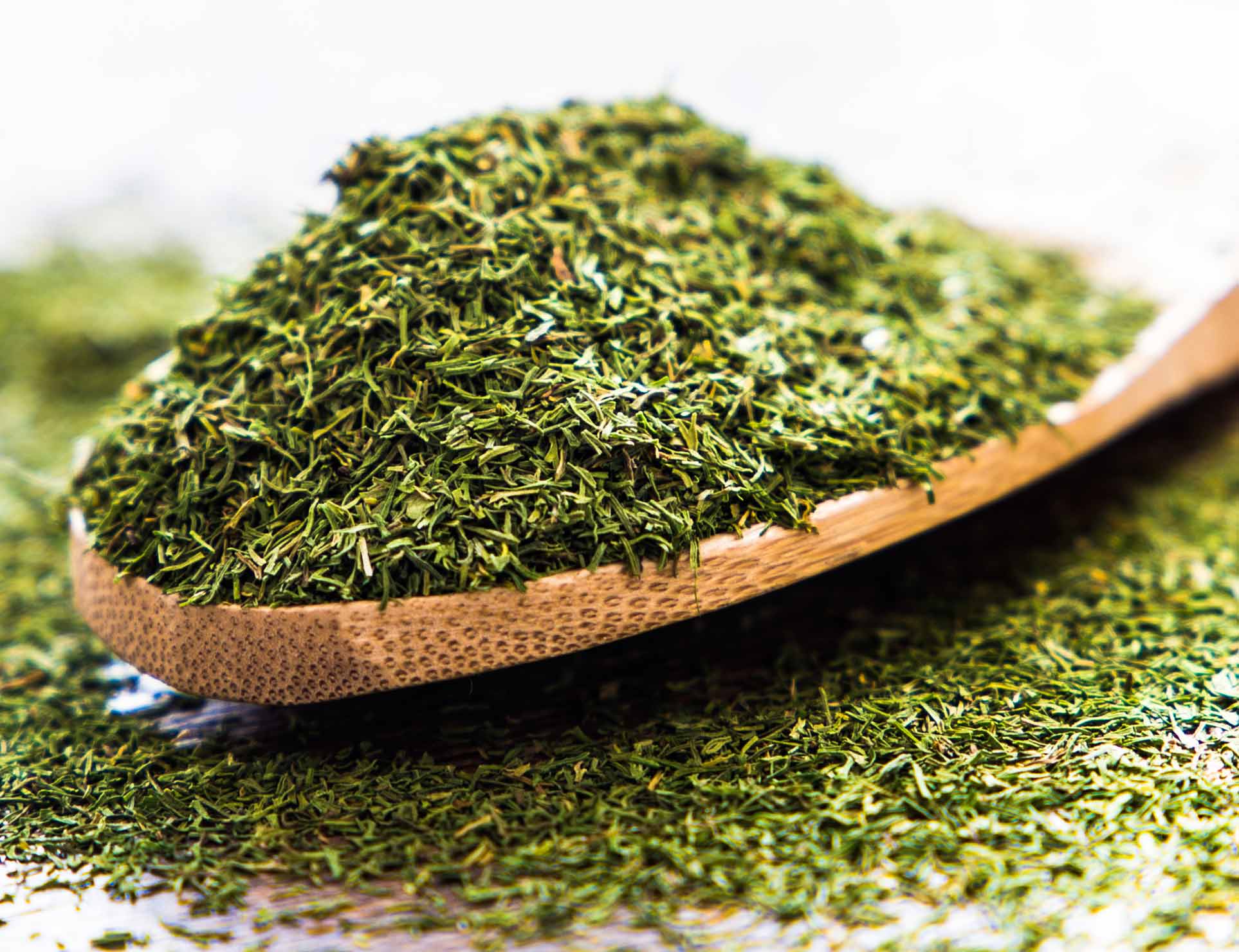
Dill Weed Leaves Herb Anethum graveolens in Bulk packaging Shipped in 20″ FCL Container
Common name: Coriander. Latin name: Coriandrum sativum L. Family: Apiaceae (Umbelliferae) Other names: Arab: kuzbara, kuzbura; Armenian:chamem; Chinese: yuan sui, hu sui; Czech: koriandr; Danish: koriander; Dutch: koriander; English: coriander, collender, chinese parsley; Ethiopian: (Amharic) dembilal; French: coriandre, persil arabe; Georgian (Caucasus): kinza, kindza, kindz; German: Koriander, Wanzendill, Schwindelkorn; Greek: koriannon, korion; Hindi: dhania, dhanya; Hungarian: coriander; Italian: coriandolo; Japanese: koendoro; Malay: ketumbar; Persian: geshnes; Polish: kolendra; Portugese: coentro; Rumanian: coriándru; Russian: koriandr, koljandra, kišnec, kinza, vonjučee zel’e, klopovnik; Sanskrit: dhanayaka, kusthumbari; Serbokroatian: korijander; Spanish: coriandro, cilantro, cilandrio, culantro; Swiss: Chrapfechِörnli, Böِbberli, Rügelikümmi; Turkish: kişniş
Commercial Pricing & Terms
Login required to view prices on the source catalog
Pricing in this export catalog is determined by order volume, destination port, and delivery terms (Incoterms: FOB / CIF). Zero prices are simulated or invented.
How to Procure This Product
You can procure this product directly from the producer or via Exportica-Managed Sourcing with agreed inspection and export coordination services.
Prepare requirements — previewRead about sourcingExporters Offering This Product
0Multiple independent exporters may offer this product specification with their own pricing and fulfillment terms.
No exporter listings are linked to this product in the current preview.
Product gallery (3)
Full description
Botanical Origin:
Common name: Dill
Latin name: Anethum graveolens L.
Family: Apiaceae (Umbelliferae)
Other names: Engl.: dill. Deu.: Dill, Gurkenkraut. Suom.: tilli. Sven.: dill. Fran.: aneth, faux anis, fenouil bâtard. Bot. syn.: Anethum sowa Roxb. ex Flem., Peucedanum graveolens (L.) Benth. & Hook. f., Peucedanum graveolens Hiern., Peucedanum sowa Roxb. ex Flem..
Description:
Dill is a hapaxanthic annual herb very similar in appearance and structure to fennel, that reaches a height of 3 to 4 ft (0.9 – 1.2 m) at maturity. It has finely cut ferny leaves that appear quite feathery, and small, yellowish-green flowers are borne in umbels. The plant usually consists of a single stalk, with hollow stems and blue-green foliage.
Range & Habitat:
Dill, Anethum graveolens L., an annual or biennial aroma herb native to Europe, is naturalized to North America and the West Indies. Principal dill production areas are India and Pakistan, but Egypt, Fiji, Mexico, the Netherlands, the United States, England, Hungary, Germany, and Holland also have commercially productive areas. The plant grows erect and can reach a height of one meter. It is characterized by hollow stems, blue-green leaves, and yellow-flowering compound umbels, which produce a dried ripe fruit commonly called seeds.
The reported life zone is 6 to 26 degrees centigrade with an annual precipitation of 0.5 to 1.7 meters and a soil pH of 5.3 to 7.8.
The hardy plant requires long days and cool weather, and is sensitive to environmental stresses, such as low moisture, hail, high temperatures, strong winds, and hard rains during the flowering and seed maturation period. Seed yields will decrease under very high temperatures. Oil yields increase with greater day length and warmer temperatures. Dill requires 12 to 18 in (30 – 45 cm) of water during the growing season.
The plant grows best in deep, fertile loam soils.
Planting & Cultivation:
Seeding
Dill seed is very small and requires a fine, firm seedbed with moisture close to the surface for maximum emergence. Germination occurs in 10 to 14 days at approximately 15° C. Dill should be seeded in early May or as early as possible after the danger of frost is over.
The seed should be placed at a depth of 0.75 to 1.0 in (2 – 2.5cm). Deeper seeding will result in poor emergence.
Commercial dill is generally planted in rows 21 to 24 in (54 – 61 cm) apart, although research plots have produced well at 14 inch (35 cm) and 6 inch (15 cm) row spacings. The seeding rate for dill is 8 to 10 lb/ac (9 – 11 kg/ha).
Fertilization
Dill responds well to high levels of fertility. Soil sampling will help determine the fertility level of the soil, but generally 60 lb/ac (66 kg/ha) of nitrogen and 30 lb/ac (33 kg/ha) of phosphorous are required. If the soil is low in potassium, an application of 30 to 40 lb/ac (33 – 44 kg/ha) may be necessary. Fertilizer may be broadcast or applied as a side dressing, but should not be applied directly with the seed.
Harvesting and Preparing for the Market:
Harvesting
Dill matures approximately ninety days after seeding. Seed harvesting should be done when the crop is damp, during early morning, to decrease shattering. For the fresh herb market, dill should be cut at first bloom. When harvesting for essential oil, dill should be cut when the early seed clusters begin to turn brown. Oil quantity and quality are their best at this time.
Dill is harvested for the limonene, dillapiole and carvone content in its oil. The dill plant is allowed to wilt in the swath for 24 hours and then is picked up with silage harvesters and blown into steam-tight forage boxes.
Yield of seed per Acre:
Typical yields for dill seed range from 500 to 800 lb/ac (560 – 900 kg/ha).
Dill oil yields approximately ten percent of seed yields. (50 – 8- lb/ac)
Export Markets:
We export our products to many countries all over the world. USA, France, Germany, China, Malaysia, Algeria, Morocco, Indonesia…etc
Quotation:
- Incoterms: FOB
- Quantity: one 20″ FCL Container Minimum
- Specification: 100% natural and Pure quality
- Documentation: COA, MSDS, TDS, GC Peaks
- Packaging: Bulk Packaging
- Payment terms: TT in advance to Our bank account
- Lead time: Shipping through 10 days from receipt of the payment.
- Sea Shipping Time: 35 days
- Air shipping time: 10 days
Quality Certificates:
- ISO 9001-2015
- ISO 22000-2005
- GMP accredited by AQC Middle East FZE
- KOSHER Certificate
- Halal Certificate
- ORGANIC Certificate accredited by CERES GmbH Germany
- NOP Certificate accredited by CERES GmbH Germany
- Egyptian Ministry of Health Permission
Contact us please to receive other supporting documents for our Oils :
- COA
- MSDS
- TDS
Branding Services
We also can do customized packaging for you to pack whatever size you like. We can help in designing labels, selecting good packets or bags. We deliver integrated solutions under your brand..
Organically Certified product Available upon request
Full Technical & Export Specifications
Technical specifications and packaging parameters recorded in the discovered product record.
| Specification / Parameter | Specification Value (From Source Record) |
|---|---|
| Country of Origin | India, Turkey, Egypt |
| Ship from | Turkey, Egypt, India |
| 20 Container Capacity H | 8000 kg |
| Herbs Packaging | PE bags 25 Kg, PE Bags 50 kg, Paper Bag 25 kg, Paper Bag 50 kg |
| Herbal Part Types | Crushed leaves Large cut, Dried Whole Leaves, Crushed leaves Medium cut, Crushed leaves small cut, Powder |
| Cultivation Type | Organic, Conventional |
| HS Code | 09109990 |
| Custom Branding & Packaging | Yes, OEM Custom banding, designing and packaging are available for that product |
| Herbal OEM Packaging | Kraft Bag, Kraft Bag with transparent window, Kraft bag with open side, Glass Jar, Glass jar Spices with holed lid, Tea bag, Tea bag with paper bag, Tea Cylinder packaging, Tin Packaging |
| Documentation & Certifications | Allergen Free Certificate, Bovine Spongiform Encephalophathy (BSE) Certificate, GMO Certificate, GRAS Status Statement, Herbal Origin Statement, Organic Certificate, Pesticide Residual Certificate, Halal Certificate, KOSHER Certificate, Researches & Studies, Certificate of Analysis (COA), Technical Data Sheet (TDS) |
| Weight | 12000 kg |
| Dimensions | 610 × 244 × 259 cm |
Two Ways to Source from Egypt
Direct Exporter Trading
Connect directly with Egyptian producers, negotiate terms, and coordinate your own shipping logistics.
Exportica-Managed Sourcing
Work with Exportica to coordinate company verification, shipment sampling, export documentation assistance, and logistics support.